Nobody Chose This, Why Most People Run a Life They Never Picked
 Garv
GarvAug 3, 2026 7 min read

Here is something nobody says out loud. Almost nobody knows how to live. Not really. Everyone is simply in the middle of it, doing it, moving through the week, and not one of them can tell you whether this was the life they were actually looking for.
Look at your own. There is a job, a city, a set of habits, a way Saturdays tend to go. Now try to remember deciding any of it. Most people cannot, and not because it was forced on them. Because it accumulated. One reasonable step after another, each defensible on its own, and at no point did anyone sit down and ask what this whole thing was supposed to add up to.
Most of a life is inherited rather than chosen
A path was already there, and you walked down it. Someone suggested a subject. Something looked impressive at the time. A thing you happened to be good at when you were fifteen became a degree, which became a first job, which became a career, which became the answer you give at parties.
This is not a conspiracy and nobody is to blame. That is what makes it hard to see.
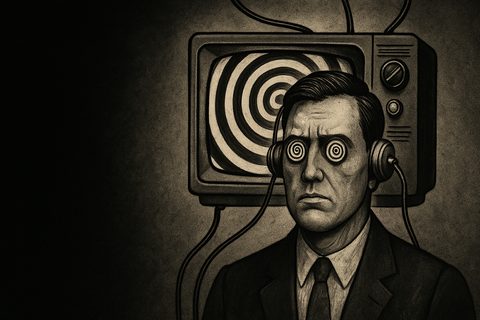
Because here is the mechanism, and it is more subtle than being told what to do. Social media, the people around you, school, none of them give you orders. They set defaults. Nobody ever sat you down and explained which jobs are impressive, which lives count as successful, what a person your age should have by now. You absorbed a ranking. And that is exactly why it never feels like obedience from the inside. It feels like preference. It feels like wanting.
Which is what makes your own life so hard to audit. You are not looking for a command you followed. You are looking for a menu of options that had already been filtered before you ever read it.
There is no control group, so stop asking that question
Underneath all of this sits the question people quietly torture themselves with. Was this the right life?
You cannot answer it. Not because you are not thoughtful enough, but because the question is built wrong. There is no control group. You never get to run the other version and see how it turned out. The road you did not take stays untaken, and therefore stays perfect, because it never had to survive contact with a single Monday morning.
So the comparison is rigged from the start. You are weighing a real life, with its admin and its dull stretches and its people who annoy you, against an imagined one that was never required to be real. The imagined one wins every time. It always will.
That question will eat years and give you nothing back. So swap it for the one standing right beside it, which is answerable, and answerable today: am I the one choosing this?
Not is it right. Just is it mine.
Seneca was angry about this two thousand years ago
The complaint is not new, which is either depressing or comforting depending on the hour.
Seneca wrote a whole essay about it, and his central observation was that people are strikingly careful with money and strikingly careless with time. Nobody hands out their property to whoever asks. Everybody hands out their days. We guard what can be replaced and give away the one thing that cannot, and we do it because we behave as though the supply were endless.
His verdict was blunt. It is not that we have a short time to live, he said, but that we waste much of it. Notice that the charge is not that life is brief. It is that so much of it gets spent on things you never actually chose, in service of a version of success you never actually examined.
He was writing to a Roman official whose entire existence was consumed by administrative duty for other people. The audience has not changed much.
The trap on the other side
Now the honest counterweight, because most essays like this one stop a paragraph too early and leave you with something unlivable.
Endlessly auditing your life is also a way of not living it. The person who is perpetually asking whether this is the right path, reopening the question every few months, never committing long enough to find out, is just as absent as the person on total autopilot. Both of them are somewhere other than their own life. One is asleep and the other is in the meeting about being asleep.
And total authorship is a fantasy. Nobody achieves it. You did not choose your language, your country, your century, your temperament, or most of what happened to you before you were old enough to have opinions about it. Anyone selling you a fully self designed life is selling something.
So the goal is smaller and far more achievable than it first appears. Move a few percent of your life from inherited to chosen. That is it. That is the whole project, and unlike the fantasy version, it is available this week.
How to take some of it back
Audit one default. Just one. How you spend Saturday. What you reach for in the first ten minutes of being awake. Why you live in this particular city. Ask whether you chose it or whether it simply arrived. You are not required to change anything. The point is only to find out which parts are yours, because you cannot examine a life you have never actually looked at.
Notice whose voice the ambition is in. When you picture the successful version of yourself, who exactly is impressed? If you can name them, a specific person or a specific crowd, then that ambition may not be yours at all. A surprising amount of what people call drive turns out to be an argument they are still having with an audience.
Change the question you are asking. Not “is this the right life”, which no one can answer, but “am I conducting myself well inside the life I am in”. Whether you picked the circumstances is often unknowable. Whether you are behaving decently, paying attention, and doing your work properly is knowable right now, without hindsight and without a control group.
Then choose one thing on purpose this month. Small is fine. Authorship is a muscle rather than a decision, and it gets built by being used, not by being resolved upon. Once you know what you would genuinely pick, the harder work of actually building toward it is a separate problem, and a better one to have.
So nobody knows how to live
That is true, and it is worth sitting with, because it is not the tragedy it first sounds like. It is the removal of an exam you were never going to pass. There is no correct life you failed to find. Nobody is holding the answer key, including the people whose lives look assembled from the outside.
You do not have to get it right. You cannot, and nobody can grade it.
But you can stop being a passenger. Everyone out there is running a life. The only question worth much is whether the person actually living it gets any say in how it goes.
Frequently asked questions
How do I know if I am living my own life or someone else’s?
Look at your defaults rather than your big decisions, since the big ones are the ones you already thought about. Take how you spend your free time, what you consider a respectable job, what you feel you should have achieved by now, and ask where each belief actually came from. If you can name the specific person or crowd who would be impressed by your ambition, it may be theirs rather than yours. The influences that shape a life usually arrive as assumptions rather than instructions, which is why they feel like your own taste.
Is it too late to change a life I never really chose?
Almost certainly not, but it helps to lower what changing means. Total authorship is not available to anyone, since nobody chose their country, era, temperament, or upbringing. What is available is moving a small share of your life from inherited to deliberately chosen, starting with a single default you examine this week. That is a real change and it compounds, whereas waiting for the moment you can redesign everything at once tends to mean nothing changes at all.
Get one like it every morning.
Free daily Stoic wisdom — one minute, real practice.