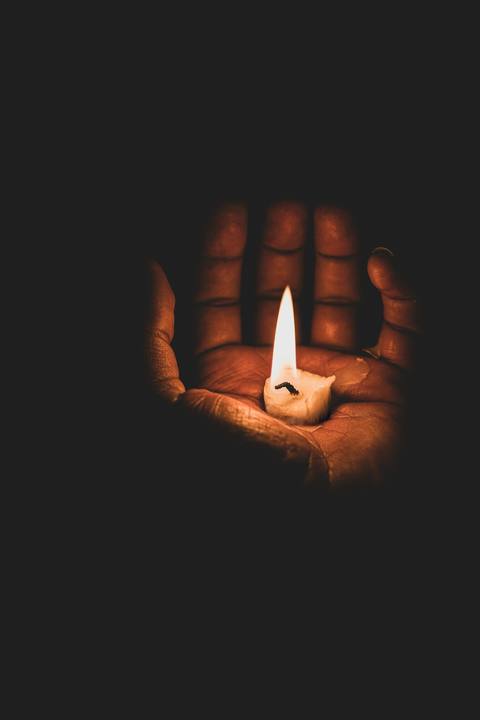
The Final Breath, Why You Should Practice Death
 Garv
GarvFeb 12, 2025 4 min read

A few years ago, I lost my dad. He was 55. It was, obviously, a major loss. One day he was here, laughing, arguing, living. The next he was gone. Just like that. And you know what messed me up the most? Not only the grief, though that was brutal. It was the sheer, staggering reality of it. One moment a whole person exists, with all their memories and opinions and plans, and the next that entire world simply switches off. That shock taught me something the Stoics had been trying to teach me all along.
The lesson death hands you
Before I lost him, death was an idea. Something that happened eventually, to other people, in some far off future I never really looked at. Losing him dragged it out of the abstract and set it down in front of me. Death is not a rumor. It is the one certainty every single one of us is walking toward, and most of us spend enormous effort pretending we are not.
Here is the thing grief made undeniable. If it can end that fast for him, it can end that fast for me, and for everyone I love. That sounds morbid. It is actually the opposite. Once the fact of the ending stops being theoretical, everything before it starts to matter more, not less. The Stoics knew this, which is why they did something that sounds strange until you have lived it. They practiced death on purpose.
What the Stoics meant by practicing death
Memento mori, they called it. Remember that you will die. Not as a source of dread, but as a tool for living. Seneca urged his students to hold their mortality close, to consider each day as if it might be the last, precisely so they would stop wasting the time they had. And he did not just preach it. When Nero eventually ordered him to die, Seneca met his own forced death with a striking calm, comforting his friends and dying with the composure of a man who had rehearsed this moment his whole life. That is what the practice is for. Marcus Aurelius, running an empire, told himself the same thing: he could leave life at any moment, and he let that shape everything he did and said.
This is not gloom. It is clarity. When you genuinely absorb that your time is finite and unscheduled, the trivial things shrink and the important ones grow loud. The petty grudge looks absurd. The postponed phone call to someone you love becomes urgent. The dream you keep parking until later loses its excuse, because later is not guaranteed. Practicing death is really a way of practicing attention.
Let the ending make the middle richer
I would give anything to have my dad back. I cannot. But the way he left me changed how I try to live, and I think he would be alright with that being the thing I carry forward. I try to remember that the people around me are not permanent, so I am a little quicker to say the thing, forgive the thing, show up for the thing. I try to waste less time being upset about what does not matter, because I have seen exactly how fast the whole board gets swept clean.
So practice your own final breath, not to frighten yourself, but to wake yourself up. Look at your life the way you would if you truly grasped it was temporary, because it is. This is the same clarity behind letting mortality sharpen how you live. Call the person. Mend the thing. Live the way you would if you understood, all the way down, that none of this lasts. That understanding is the most valuable thing loss ever gave me, and you do not have to lose someone to start living by it.
Frequently asked questions
What does it mean to “practice death” in Stoicism?
It is the practice of memento mori, deliberately remembering that you will die, not to feel morbid but to live better. By keeping your mortality in view, the trivial things lose their grip and what truly matters becomes clear and urgent. Seneca, who ultimately faced his own death with great composure, and Marcus Aurelius both used it daily as a tool for focus, gratitude, and living without postponement.
Isn’t dwelling on death depressing?
It sounds like it should be, but in practice it does the opposite. Facing the fact that your time is limited and uncertain makes the present more vivid and important, not less. It pushes you to mend relationships, drop petty grievances, and stop postponing what matters. Used well, remembering death is one of the most life affirming habits there is.
Get one like it every morning.
Free daily Stoic wisdom — one minute, real practice.